I was fourteen when my friend, Brooke, invited me to stay overnight at her house.
Her father seemed unusually serious, but Brooke told me he was always like that.
Around two in the morning, I woke up thirsty and noticed a tiny green light near the bookshelf.
It was attached to a small camera.
My stomach dropped.
I quietly draped a sweater over it and woke Brooke.
Before I could explain, her bedroom door flew open.
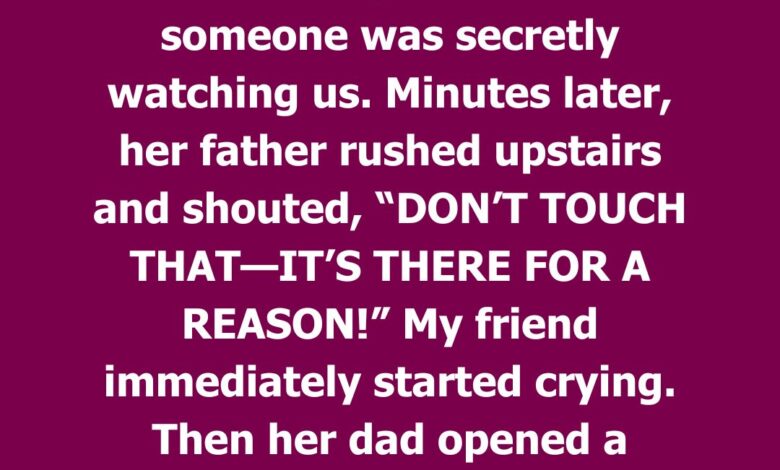
Her father rushed in and pulled the sweater away.
“Please never cover that,” he said sharply.
Brooke immediately started crying.
I thought my worst fear had just been confirmed.
Instead, her father opened a drawer and showed me a small monitor connected to the camera.
Brooke had epilepsy.
Months earlier, she’d experienced a severe nighttime seizure while everyone was asleep. Since then, her parents used a motion-and-sound monitoring system that alerted them if unusual movement happened during the night.
Brooke had begged them not to tell friends because she was embarrassed and afraid people would stop inviting her places.
Her father apologized for frightening me.
“I should’ve explained before you stayed over,” he said.
An hour later, the alarm actually sounded.
Brooke began having another episode, and her parents were beside her within seconds.
She recovered safely.
That night taught me something I never forgot: what looks terrifying without context can sometimes exist for the exact opposite reason—to keep someone safe.