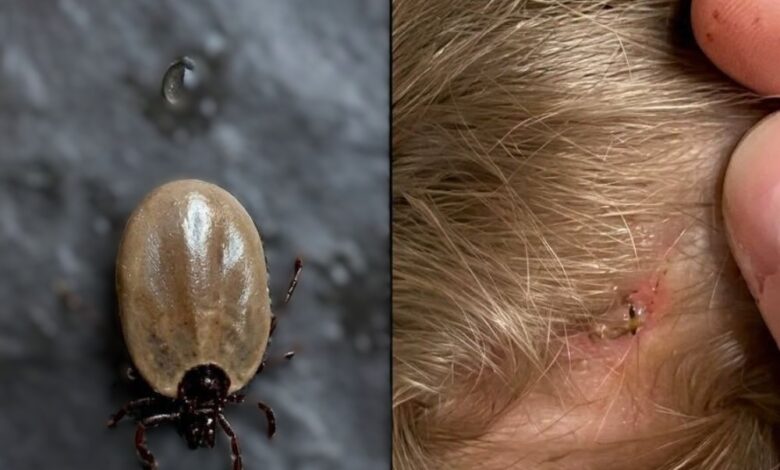
Ticks are small parasites that feed on the blood of humans and animals. They are commonly found in grassy areas, forests, gardens, and on pets. Because tick bites are usually painless, many people do not notice them right away.
After a tick bites, it attaches tightly to the skin and may stay there for hours or even days. The bite itself may only cause mild redness or itching, but some ticks can carry dangerous diseases.
Warning symptoms after a tick bite may include fever, headache, tiredness, muscle pain, joint pain, swollen lymph nodes, or a spreading rash. One of the most well-known illnesses spread by ticks is Lyme disease, which can become serious if left untreated.
Doctors warn that the longer a tick stays attached, the greater the risk of infection in some cases. That’s why quick and careful removal is important.
To safely remove a tick, use fine-tipped tweezers and pull upward slowly without twisting or crushing it. Clean the skin well afterward.
You should seek medical help if the bite becomes swollen, painful, or develops pus, or if symptoms like fever, weakness, chest pain, or breathing problems appear.
A tiny tick bite may seem harmless at first — but paying attention early can prevent serious health complications later.