I’d Been Ashamed of the Birthmark on My Forehead Since Childhood – 25 Years Later, It Changed My Life

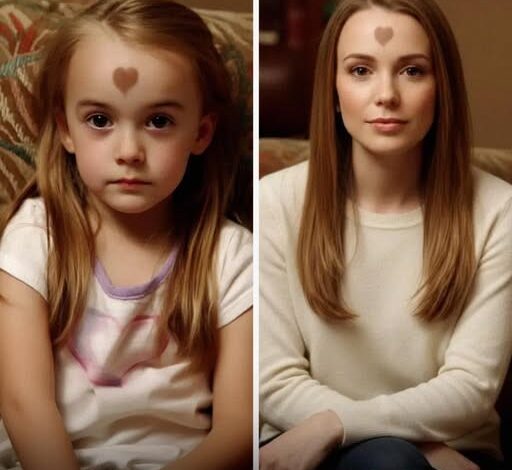
I grew up believing the dark birthmark on my forehead was the worst thing about me. Kids stared, joked, and told me to cover it. I learned to angle my face, hide behind my hair, and stay quiet so no one would look too long. By my 20s, I’d saved up for one thing: surgery to erase it. I even booked the procedure.
Then I landed an interview for my dream job. That day, I did something brave—I pulled my hair back and walked in as I was.
The interview started fine until the hiring manager entered, looked at me, and froze. His face drained of color.
“You’re dead,” he whispered. “You were supposed to be dead.”
He sent his assistant out and stared at my forehead like he’d seen a ghost. Then he told me a story: years ago, the woman he loved left while pregnant. Later, she called saying the baby didn’t survive—but she’d sent one photo first. The baby had a birthmark in the exact same place.
I was adopted as a newborn. I’d never known my biological parents.
He asked for a DNA test.
I agreed.
The results came back: he was my father.
A few days before my surgery, the clinic called to confirm my appointment. I stood in front of the mirror, hair pulled back, and realized something I’d never expected:
That mark wasn’t something to erase. It was proof I’d existed. Proof I’d been remembered.
I canceled the surgery.
I didn’t suddenly love the birthmark—but I stopped treating it like a mistake.
It wasn’t a flaw.
It was a map that led me home.