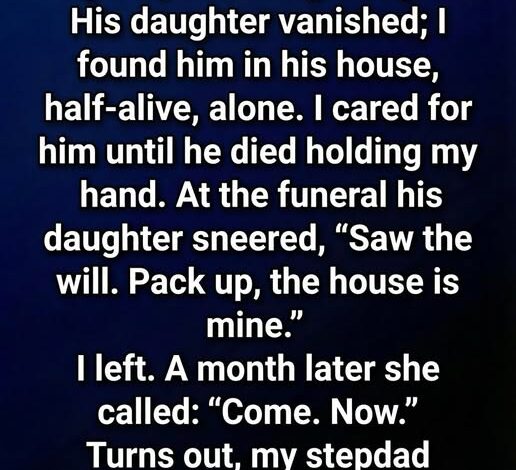
When my stepfather became seriously ill, I was the only one who noticed. His house had grown quiet—heavy, lonely silence. His biological daughter had stopped visiting months earlier, calls went unanswered. When I finally checked on him, I found him weak and alone. Without hesitation, I moved in, setting aside my own life to help him through each day. We talked about memories, regrets, and small joys. Our bond became rooted in presence, not obligation.
As his condition worsened, I stayed by his side until the very end. When he passed, he held my hand, calm and grateful not to be alone. At the funeral, his daughter arrived for the first time in months. Her words focused on inheritance, not loss. I said nothing, choosing peace over conflict.
Weeks later, she called urgently. When I returned, documents surfaced—my stepfather had quietly arranged everything thoughtfully, honoring the person who had stood by him. There was no drama, only clarity. Gratitude had guided his decisions.
In that moment, I realized the story wasn’t about a house or possessions—it was about showing up, about compassion offered without expectation. My stepfather’s final gift wasn’t material; it was the quiet reminder that kindness, when genuine, always returns—often in ways we don’t anticipate.