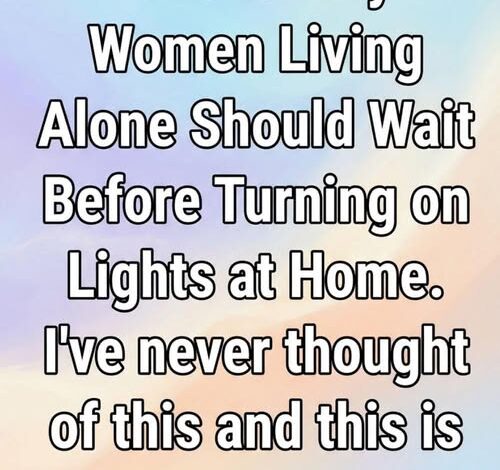
When you live alone, routines feel comforting. You walk in, close the door, flip the light switch. Automatic. Safe. Normal.
But that tiny habit can reveal more than you think.
At night, a brightly lit home creates sharp contrast. If curtains or blinds are open even a little, people outside can see in clearly — while you see only your own reflection. Someone could notice your layout, whether you’re alone, or which rooms you move through. It’s not about panic. It’s about visibility.
Try a safer first step: pause for half a minute.
Lock the door.
Check windows.
Close curtains or blinds.
Then turn on the lights.
That short moment gives you control over who can see inside.
There’s also the issue of predictability. Lights turning on at the same time every night can quietly broadcast your schedule. Small changes — using a lamp, lighting a different room first — make your routine harder to track.
The pause offers something else too: awareness.
Do you hear anything unusual?
Is something out of place?
Safety experts often say awareness is your strongest defense.
If darkness worries you, consider smart bulbs, entry motion lights, or a small flashlight.
Living alone is independence and strength. Taking simple precautions isn’t fear — it’s intention.
Sometimes protection isn’t dramatic.
It’s the quiet pause before you flip the switch.