I Gave My Late Husband’s Jacket to a Freezing Veteran — A Week Later, I Got an Email Titled ‘Regarding the Incident Outside the Grocery Store’

After her husband’s death, Melissa learned how fragile kindness could be. One quiet decision outside her apartment changed everything, pulling her grief, her children, and her past into sharp focus.
The email sat in my inbox for nearly an hour before I opened it.
“Regarding the incident outside the grocery store.”
I froze. Micah’s sneakers were still by the door, scuffed and unlaced. Nova’s backpack leaned against the wall, one strap twisted as if she had shrugged it off in a hurry. An incident? What incident?
A week earlier, I had done something small that now felt larger than life.
After Nathan died, practicality took on a different meaning. I moved through my days with intention—not because I felt strong, but because my children were watching, waiting for cues. Micah, ten, noticed the unsaid things. Nova, eight, felt the shifts in a room even when nothing was spoken.
That morning began like any other weekday. Nova hovered near the door, jacket half zipped. “Grandma is picking me up today, right?”
“Of course, baby. She’ll be here on time.”
True to my words, my mother arrived punctually, kissed my cheek, and reminded Micah to eat more than cereal.
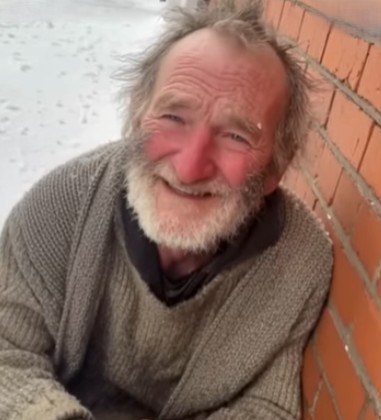
Downstairs, I saw him. A man against the brick wall near the store entrance, shoulders hunched, a cardboard sign: “Veteran. Anything helps. Please.”
He wore only a thin sweater. His hands were red and bare.
“Ma’am… could you spare some change?”
I hesitated. Life didn’t pause because someone else was struggling. But I thought of Nathan, who once complained about the cold biting into him while deployed.
“You should have a coat,” I said.
“I know,” he laughed, embarrassed.
Back upstairs, Nathan’s jacket hung on the rack. Micah had sometimes slipped into it when he missed his father. Nova pressed her cheek against it to soothe herself.
I took it down. “It’s clean…and warm.”
“Paul, ma’am,” he said, unsure. “I can’t take this.”
“It used to belong to someone, but it isn’t doing anyone any good hanging in a hallway,” I said. Slowly, he slid his arms in.
Inside the store, I bought hot soup, bread, and tea for him. He nodded, quiet but grateful.
The email didn’t stop existing.
“Building policy prohibits residents from engaging in unauthorized interactions…”
I reread it three times, feeling Nathan’s teasing voice in my mind: “You always expect the worst first, Mel.”
I called my mother, then the number on the email.
“Did you break a rule?” I asked.
“Not really,” a woman said. “We just needed to document it. No charges. He was cooperative. And he asked us to pass along his thanks—for the jacket. He also mentioned your husband by name.”
Nathan.
“He said they served together. That’s how he recognized the jacket.”
Paul came by the next afternoon, jacket folded over his arm. “I wanted to return this. The shelter took me in. They treated me like I mattered once they saw who it belonged to.”
“He would’ve liked what you did,” he said. “He always believed people should look out for each other.”
Upstairs, Micah noticed the jacket. “It’s back.”
“Yes,” I told him.
Nova wrapped her arms around it.
That night, when I hung it back on the rack, I didn’t wonder anymore if kindness needed permission. I knew it was something we were meant to pass on.